During his visit to Dakar earlier this month, the Mauritanian Prime Minister Moctar Ould Diay sought to reassure the Senegalese authorities by stating that all African nationals were welcome in Mauritania, at a time when the country was facing criticism over its treatment of migrants.
Prime Minister Moctar Ould Diay insisted that “the management of migration and entry at our borders” was being carried out “normally and according to routine”. He made this statement on Thursday, 8 January in response to a journalist’s question during a press conference in Senegal, where he was on an official two-day visit.
Located on the Atlantic coast, Mauritania serves both as a host country for many West African workers and traders and as a transit hub for migrants seeking to reach Europe. It was in this context that, in early 2025, a large-scale campaign of arrests and expulsions targeting migrants in an irregular situation sparked significant diplomatic tensions with several countries in the region, including Senegal. Dakar expressed its “outrage” at the treatment of some of its nationals, while Nouakchott defended the operations as part of migration control measures aimed at tackling irregular migration and dismantling migrant smuggling networks.
In a report published in August 2025, Human Rights Watch (HRW) accused the Mauritanian authorities of committing “serious human rights violations” against migrants and asylum seekers between 2020 and early 2025. The following month, Gehad Madi, the UN Special Rapporteur on the human rights of migrants, urged the Mauritanian authorities to “better align their practices with international human rights standards” regarding migrant populations.
On 8 January, Moctar Ould Diay held talks with his Senegalese counterpart, Prime Minister Ousmane Sonko, with both leaders intent on easing tensions. “Mauritania is part of its broader environment — the sub-region and the African continent — and all nationals from these countries are welcome in Mauritania; that is our understanding,” said the Mauritanian Prime Minister. “This must be done in an orderly manner and in compliance with migration regulations,” he added.
For his part, Mr Ousmane Sonko commended the efforts made by Nouakchott in recent months at the Senegal–Mauritania border, which resulted in the ‘regularisation’ of 28,000 Senegalese people. He further clarified his position, emphasising that since the implementation of an agreement on 1 July, the number of Senegalese people being regularised in Mauritania had increased from just over 2,000 to 28,000. “The real issue today,” he continued, “is the number of Africans being repatriated from Europe and the number of visas being denied each year. Even travelling back and forth has become almost impossible, even for the elites,” he concluded firmly.
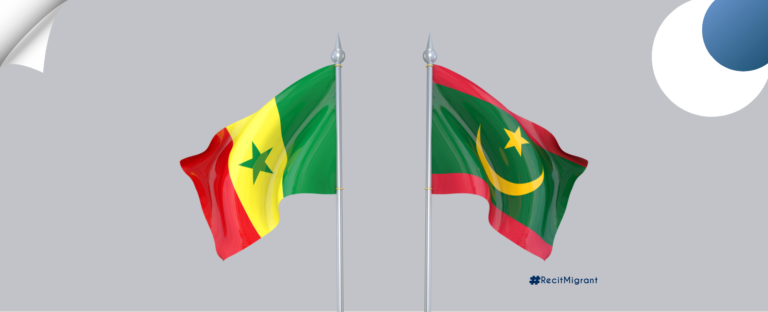
On 2 June, Mauritania and Senegal signed two migration agreements: one to combat irregular migration, and the other to regulate the conditions of stay. Under these agreements, Nouakchott and Dakar committed to removing any obstacles to the free movement of their respective nationals.