
![[Press review]: Migration routes under strain – between shipwrecks, violence and tightened borders](https://migration.africtivistes.org/wp-content/uploads/2026/02/Ines3-1-768x312.png)
Recent migration news from West and North Africa, and on to the European and American borders, highlights contrasting realities. Interceptions, shipwrecks, illegal detentions and tougher expulsion policies serve as a reminder that lives remain caught up in increasingly perilous journeys behind the figures and decisions.
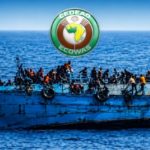
Despite the risks, attempts to leave West Africa by sea continue. In early January, more than 780 migrants from Senegal, Guinea, Mali and The Gambia were intercepted in The Gambia as they attempted to reach Europe illegally. These operations occurred shortly after a pirogue carrying over 200 people sank, leaving at least 31 dead. This tragedy has reignited emotions in this country, which is a major departure point for the Spanish archipelago of the Canary Islands.
In Senegal, a pirogue that had departed from The Gambia was intercepted in Thiaroye-sur-Mer, on the outskirts of Dakar, carrying 61 irregular migrants. One person died during the security forces’ intervention, reminding us that failed departures are also marked by human loss.
In Mali, travelling on internal roads is proving to be just as dangerous. Near Timbuktu, at least 33 people died when a pirogue sank into the Niger River. The overloaded boat, which did not comply with navigation standards, was carrying around 50 people. This tragedy highlights the fact that the risks associated with migration are not limited to international borders, but affect local travel too.
Further north in North Africa, the situation facing migrants remains particularly worrying. In Libya, another operation in the south-eastern town of Kufra led to the release of over 200 migrants from a ‘secret prison’. Most of those released were from Somalia and Eritrea. Some had been detained for more than two years in conditions described as inhumane, with limited access to water, food and healthcare. They were also subjected to torture in exchange for ransoms demanded from their families. This comes alongside the discovery of a mass grave containing the bodies of 21 migrants in Ajdabiya in the northeast of the country. According to local media reports, the victims had been held in a farm that had been converted into a clandestine detention centre. These revelations come at a time when Libya is hosting nearly 930,000 migrants, according to the International Organisation for Migration. In 2025, the Libyan authorities intercepted more than 27,000 people in the Mediterranean Sea, of whom 16,000 agreed to voluntary return. This illustrates a migration management approach that is largely focused on control and containment.
The Frontex agency reports a 26% drop in irregular border crossings into the European Union in 2025. Although this overall decrease is presented as the result of enhanced cooperation with partner countries, it nevertheless masks a shift in routes and persistent dangers on the longest and least monitored routes.
In the United States, meanwhile, the Donald Trump administration has announced a freeze on permanent visa procedures for citizens of 75 countries, as part of its policy to combat immigration. This decision will affect thousands of applicants for permanent residence and will further close legal migration channels.
This news report reminds us that, from West Africa to North America, although controls are tightening and certain indicators are declining, internal and regional migration in Africa – which is largely structured and legal – coexists with international migration routes that are still characterised by violence, confinement and uncertainty.

![[Press review]Migration: Striking a Balance Between Inclusion, Border Control](https://migration.africtivistes.org/wp-content/uploads/2026/10/Ines-3-_-Revue-de-presse-_-La-migration-entre-inclusion-et-controle-des-frontieres-150x150.png)