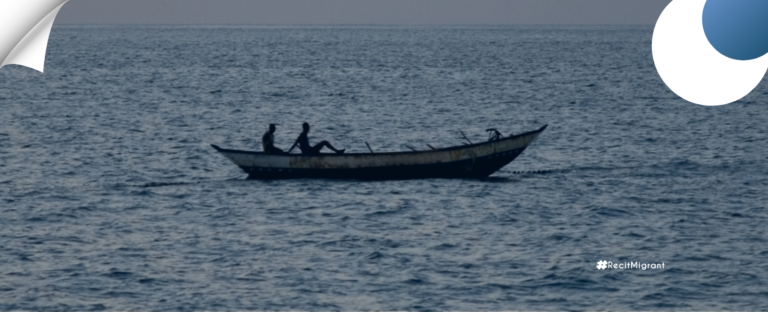
On 8 February 2026, the Esplanade Demba KEBE in Pikine Guinaw Rail Sud – (Dakar, Senegal) was the setting for a vibrant and solemn tribute. Initiated by the Collectif des Migrants de Retour pour la Réinsertion et le Développement (CM2RD), chaired by Cheikh Abdou Fall, the “Commémor’Action” day was organised to honour the memory of the victims of the TARAJA and all those who have lost their lives along migration routes. The Boza Fii and the families of the missing were present at this event which became a powerful collective plea against deadly borders.
Stand against oblivion and silence
Those who are missing, whether lost at sea or on desert migration routes, must remain in our memories. This is the essence of Commémor’Action. For Cheikh Abdou Fall, this initiative is above all an act of resistance against indifference. “First and foremost, this initiative is about remembrance. Our brothers and sisters perished at sea or in the desert. We have gathered here at Guinaw Rail with their families to honour them and keep their memory alive,” he explains, his voice betraying a hint of emotion. The gathering in Pikine is an act of mourning and a promise to never forget those who went missing, as well as a commitment to building a sustainable alternative to desperate exile. Through the term ‘Commémor’Action’, the Movement is committed to providing a space for remembrance while actively combatting the policies that lead to such tragedies.
Appeal to youth for patience and lawful conduct
In a direct address to Senegalese youth, the president of the CM2RD delivered a profound and personal message about patience and legality. “Young people should not lose heart. In life, everything takes time. I have travelled a lot, but you must always follow the rules and never risk your life in pursuit of an increasingly distant dream. There are legal and safe pathways; we must opt for them,” he emphasised. He stressed the importance of avoiding haste, noting that risking one’s life in a pirogue could no longer be considered an acceptable means of achieving success.
Striking economic paradox: the cost of a pirogue fare exceeds that of an airfare
Mr Fall’s analysis reveals a striking economic paradox that poses a direct challenge to both national authorities and international partners. He reveals that a spot on an overloaded boat can cost up to 800,000 CFA francs — often far more than a standard plane ticket. Based on this observation, he is calling for consular policies to be reviewed. “Today, it seems that visa reciprocity is considered impossible for reasons we all know. But at the very least, efforts should be made to facilitate access to this precious document. Travel has become a myth. By making visas more accessible, we can save lives,” he states firmly.
Finally, the president of the Collectif des Migrants de Retour pour la Réinsertion et le Développement (CM2RD) believes that a sustainable solution must be found within the country. He is urging the government to create the ideal conditions to encourage potential migrants to remain in Senegal, particularly by providing high-quality vocational training programmes that align with market demands. He also believes that it is imperative for the government to diversify and strengthen its communication on migration-related issues. The objective is clear: to provide young people with the information they need to foresee a stable future in Senegal while also facilitating legal travel for those who wish to explore the world without endangering their lives.