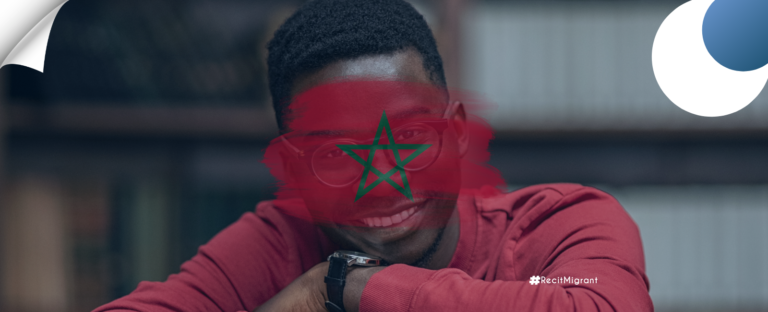
Kossi K. was 22 years old when he left Lomé for Casablanca. He had a student visa tucked carefully into his passport and a fairly clear idea of what he was looking for: a recognised degree, international exposure and the promise of a more stable future. Like many young Togolese, he saw Morocco as an accessible yet ambitious destination — a bridge connecting Sub-Saharan Africa to the rest of the world.
“I wasn’t leaving to flee my country,” he says. “I was leaving to educate myself so that I could come back stronger.”
Departure: torn between pride and family expectations
In his family, Kossi’s departure is seen as a collective success. His neighbours congratulate his parents and his uncles remind him that he is now “carrying the family name abroad”. This pride also comes with silent pressure.
“From the airport, I realised that failure was not an option. Everyone was counting on me.” The plane lands at night. Casablanca stretches out before him — vast, noisy and foreign. The shock is imminent.
Arrival: discovering solitude
The first few months are difficult. Kossi finds himself in an African country that is very different from the one he knows. Everything demands effort and adaptation: the language, the accents, social norms and the rhythm of day-to-day life.
The courses at university are demanding too. Students come from various countries in Africa and the Middle East. Sometimes Kossi feels invisible, and sometimes overly visible. “People often asked me where I was from. When I said ‘Togo’, some people simply didn’t know where it was. It made them smile, but it stung a little.’
Outside the campus, he experiences lingering stares, awkward remarks and, sometimes, mistrust. Nothing systematic, but enough to affect his morale.
Surviving on little
Like many international students, Kossi K. has a tight budget. Scholarships arrive late, the cost of living is constantly rising and it is difficult to find part-time jobs without connections. “There were months when I counted every dirham. I often ate the same thing every day. I avoided going out.”
He hesitates to talk to his family back home about his difficulties. He doesn’t want to worry them or give them the impression that he has failed. “When my mother called, I always said everything was fine. In reality, I sometimes felt very alone.”
Moments of doubt
The solitude, academic pressure and uncertainty about the future eventually take their psychological toll. He talks about sleepless nights, mental fatigue and disconnection. “’I wondered if I had made the right choice. Are all these sacrifices really worth it?”
Sometimes he thinks about returning to Togo before finishing his studies. But he perseveres — perhaps out of pride, but mostly out of hope.
The encounter that changed everything
Things begin to change as Kossi joins an African student association. There, Kossi meets young people from Senegal, Cameroon, Côte d’Ivoire and Mali.
“For the first time, I could talk without having to explain. We understood each other.”
The conversations, shared meals and practical advice become a lifeline. He soon realised how important community support was in the migration experience.
Regaining confidence
Gradually, Kossi begins to adapt. He gains a better understanding of academic expectations, improves his grades and starts to really participate in class. He even starts helping newly arrived Togolese students settle in. ‘At one point, I told myself, “If I survived the beginning, I can make it to the end”.’
He learns to see Morocco differently — as a place of learning that can sometimes be tough but also rich in human opportunities.
Changed perspective on oneself:
Now, at the end of his programme, Kossi reflects on his journey with clarity. He doesn’t idealise it, but he doesn’t regret it either. “The experience has changed me. I’ve become more patient and resilient. I’ve learned to ask for help.”
He now feels simultaneously Togolese, African and somewhat Moroccan. This multiple identity, which was once a source of confusion, has now become his strength.
Choosing between returning home and an uncertain future
Even though he knows reintegration will not be easy, Kossi plans to return to Togo after his studies. “When you come back, people think you’ve succeeded at everything. They don’t see the invisible sacrifices.”
Nevertheless, he is convinced that his migration experience, with all its challenges and lessons, has shaped who he is today.
Behind the statistics on South–South student mobility are lives being reshaped far from home, often in silence. Hearing these stories reminds us that student migration is not just an educational strategy; it is also a profound human and psychological adventure.
Note: Student’s real name withheld for safety and privacy reasons