Since war broke out in Sudan in 2023, neighbouring Chad has become one of the main host countries for civilians fleeing the violence. In the eastern province of Ouadaï, the Kuchaguine-Moura camp shelters thousands of refugees. Behind the numbers are mostly women and children forced to live through a war that has upended their lives.
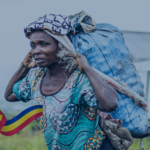
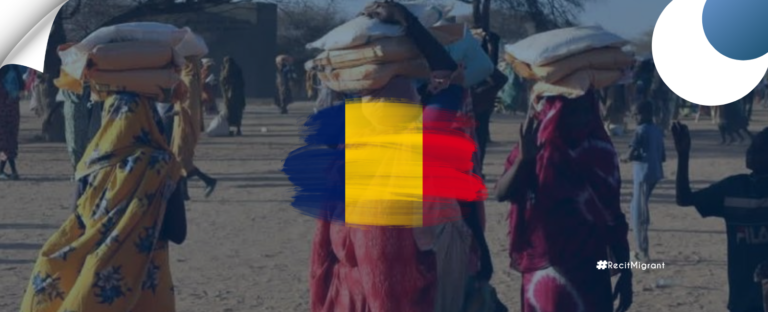
By mid-morning, the dusty tracks into the camp are stiflingly hot. Between the tarpaulin and brick shelters, figures slowly come into view, mostly women with children. Some walk barefoot; others use colourful scarves to shield themselves from the sun. When a vehicle stops at the entrance, several children come closer out of curiosity. The women arrive a few moments later, clutching their documents. In this waiting area, every visit might bring assistance. Some hold out their papers; others simply whisper the same question: “Do you have anything for us?”
Sitting under a makeshift shelter, Miyadah Abakar Abderamane agrees to tell her story. Originally from Nyala in Darfur, this mother fled her hometown when the fighting reached her neighbourhood. She lost part of her family on the way. Her mother and several brothers disappeared en route to exile. Her husband also died, leaving her alone with five children. “I ended up in this situation because of the war. I’ve lost everything,” she confides. Since reaching Kuchaguine-Moura, she has been getting by on whatever work she can find. She sometimes washes clothes for other refugees and for locals in exchange for money. This irregular income barely covers food.
Forced displacement and lost livelihoods
Mariam Abdallah, a few shelters away, also remembers leaving Nyala in a hurry. When the violence drew closer, she fled the city with her children, leaving her home and most of her belongings behind. She reached Chad by whatever means she could find, often in a state of uncertainty. Life in the camp is now made of simple routines and long waits. Work is scarce, so humanitarian aid is her only hope. Mariam suffers persistent pain in her kidneys and legs. Healthcare exists in the camp, but it is limited against the number in need. Still, she keeps hope alive for her children. “I’m holding on for them,” she says.
Further in, Fatimé Saleh Souleymane tells a similar story. From El Fasher, a Darfur town also hit hard by the fighting, she lost a brother in the conflict. Since arriving in Chad she has lived in extreme precarity, often relying on other refugee families. “Sometimes I don’t even have enough money to buy things for my children,” she explains. Like many in the camp, she does not expect to return to Sudan any time soon. The persistent insecurity and the presence of armed men make it far too dangerous.
Beyond daily needs, another subject comes up again and again: the future of the children, whose schooling the war has interrupted.
Like many others, Halimé Arbab is from El Fasher, and like them she is unsure of the future. Her husband was killed in the violence that swept the town before they fled. She remembers the place plunged into chaos, ravaged by attacks and looting. In the circumstances, exile was the only way to keep her children safe. Having arrived in Chad with nothing, she is now trying to rebuild a normal life for them. “We arrived here with nothing,” she says simply.
Pressure on the camp
Ali Djimet, site manager at the Abéché office of the National Commission for the Reception and Reintegration of Refugees (CNARR), says Kuchaguine-Moura now holds almost 25,000 people. Most are women and children who fled the violence in Darfur. The camp keeps receiving refugees relocated from the border town of Adré. “This constant influx puts further strain on the services available,” Mr Djimet says.
Despite the presence of several humanitarian organisations, cuts to international funding are undermining essential services such as healthcare, education and access to water.
By the end of 2025, the United Nations estimated that Chad was hosting more than 1.2 million forcibly displaced people, almost 900,000 of them Sudanese refugees. The majority were women and children.
In Kuchaguine-Moura, these figures have a human face: mothers trying to rebuild far from home, and children growing up in exile, caught between memories of war and hopes for a steadier future.