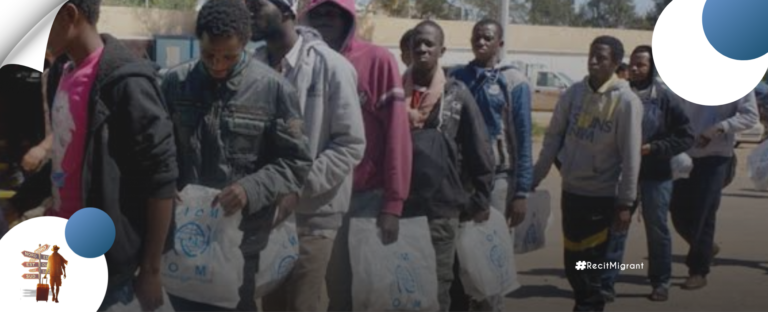
After returning home, the journey to rebuilding stability is often steeped in difficulties. To provide more concrete and sustainable solutions to this challenge, Senegal and its partners are striving to strengthen the National Orientation Mechanism (MNO).
Gathered in Dakar, government officials and international stakeholders discussed ways of transforming this mechanism into a permanent support system, accessible to all and grounded in the realities on the ground. Because finding one’s footing after a migration experience does not happen overnight.
On Wednesday 21 October 2026, a workshop was held in Dakar to discuss the future of the National Orientation Mechanism (MNO) for returning migrants. The aim of this meeting was simple: to take stock of what already exists and to draw up a plan to ensure the long-term sustainability of this scheme. The MNO aims first and foremost to listen to each individual, assess their specific needs and refer them to the organisations that can genuinely help them.
Speaking at the opening of the discussions, the Director of Senegalese Communities Abroad, Abdou Karim Cissé, highlighted the key condition to ensure this project does not remain a dead letter.
“The sustainability of the mechanism requires strong national ownership, effective coordination and sustainable resources,” he began by emphasising.
According to Mr Cissé, making this system work requires stakeholders to work better together, securing steady financial resources and facilitating everyone’s day-to-day access to reintegration support.
The administrative paperwork hides the stories of men and women facing very concrete difficulties. Returning home comes with doubts and vulnerabilities that must be addressed. In his view, “returning home can bring with it economic, social and psychosocial problems that require tailored responses, particularly in terms of access to information, training, employment, funding and social services”.
For assistance to be truly effective, we must avoid one-size-fits-all solutions and adapt to each individual’s circumstances.
‘’Identifying their individual circumstances and needs is an essential step in offering them tailored support’’, Mr Cissé further emphasised when speaking about returning migrants.
The Head of Mission for the International Organisation for Migration (IOM) in Senegal, Aissata Kane, whoo was seated by the Government officials, reiterated her organisation’s commitment to support. With the organisation’s work also extending to Cape Verde, The Gambia, Guinea-Bissau and Sierra Leone, Ms Kane highlighted what is needed to ensure the scheme is sustainable in the long term.
She cited “institutional and legal grounding, the mobilisation of predictable financial resources, the strengthening of operational capacities and territorial equity in access to services” as necessary conditions for the sustainability of the national referral mechanism.
Beyond institutional frameworks, she emphasised the value of establishing bridges to the local economy.
For reintegration to be successful, opportunities must be created within the private sector, training centres and organisations supporting business start-ups.
In her view, the approval of the sustainability plan should enable the mechanism’s technical achievements to be transformed into institutional and operational commitments, with clearly defined responsibilities, a timetable and monitoring procedures.
Concluding, Aissata Kane reaffirmed her organisation’s desire to continue providing technical support for a coordinated mechanism that is gradually consolidated and driven by national institutions, reiterating the IOM’s commitment to working alongside local stakeholders.