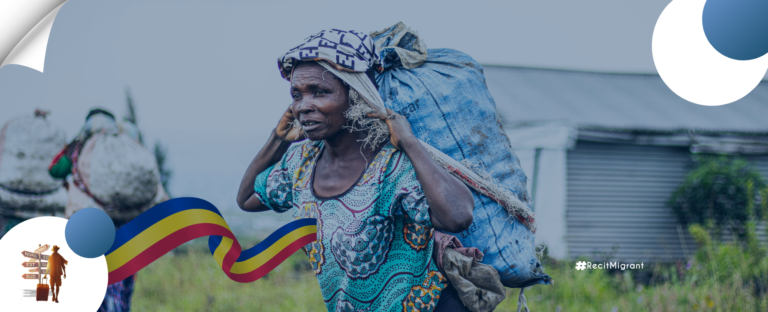
One out of every four persons living in Lac Province has been forcibly displaced with women and children accounting for 87 per cent of this population, whilst 84 per cent of displaced households are run by women. Back from a field trip to Lac Province, Yadang Djourolbé Abraham, Oxfam Chad’s Livelihoods and Food Security Officer, discusses the many challenges facing displaced women, including insecurity, restricted access to livelihoods and a lack of basic services.
Dialogue Migration: What is the current condition of women amongst the displaced population in Lac Province?
Yadang Djourolbé Abraham: The situation for women in Lac Province continues to be extremely dire. It is marked by chronic vulnerability, compounded by persistent insecurity resulting from the actions of non-state armed groups (NSAGs) and by the effects of climate change, particularly variations in rainfall and extreme weather events.
Women and girls account for a significant proportion of the affected or displaced populations in the region. They are constantly exposed to threats to their safety, including the risks of abduction, physical violence and gender-based violence (GBV). These risks are particularly significant when they leave the camps to fetch firewood or water, or to work on land some distance from where they live.
DM: What are the most pressing specific needs of displaced women, and what responses are currently being provided?
The main needs relate first and foremost to the prevention and management of gender-based violence, psychosocial support and the creation of safe spaces for women and girls. There are also critical needs regarding access to safe drinking water, decent shelter and basic sanitation facilities, particularly as health risks linked to cholera persist in Lac Province. Access to arable land, suitable agricultural inputs and income-generating opportunities is also a major concern.
Multi-sectoral emergency measures are being implemented in response, including cash transfers, protection kits, non-food items provision and nutritional supplements for children aged 6 to 23 months and for pregnant or breastfeeding women.
Resilience and adaptation projects are also being developed, with some NGOs setting up solar-powered irrigated market gardening schemes in an effort to enable women to grow crops within easy reach of their homes. We also provide income-generating activities and offer small ruminants to women’s groups. These initiatives aim to strengthen their livelihoods, as well as to foster social cohesion and peacebuilding.
DM: 84% of displaced households are run by women. What problems do they face in providing for their families and becoming self-reliant?
The large number of female-headed households places a heavy burden on women’s shoulders. They must fulfil both their responsibilities as mothers and as the main or unique provider for their families.
Traditional norms often restrict their access to property and land. Furthermore, they lack the seed capital needed to set up small income-generating activities. The duties of fetching water, collecting firewood and looking after children significantly give them little room to carry out stable economic activities. Many are therefore left with no choice but to take on small, day-to-day jobs, which are often back-breaking and underpaid. These activities may also expose them to various forms of exploitation and abuse.
Illiteracy and geographical isolation are other impediments to their financial inclusion and to developing the technical skills that would help them establish sustainable livelihoods.
DM: A lack of funding is curtailing protection and support services. What particular impact does this situation have on displaced women?
The chronic underfunding of the humanitarian response in Lac Province has direct and disproportionate repercussions on women.
The increasingly shrinking support services and awareness-raising programmes leave more women prone to gender-based violence, with limited access to legal assistance and medical care. The decline in income-generating projects, such as market gardens or vocational training, also hinders their empowerment and makes them heavily dependent on emergency aid. The lack of psychological support and reproductive health services adds to the stress of trauma survivors and may also pose additional health risks to mothers and children.
In the absence of adequate support, some women may be compelled to resort to dangerous survival strategies, including prostitution or, for young girls, early marriage with possible negative and lasting impacts on the future of families.