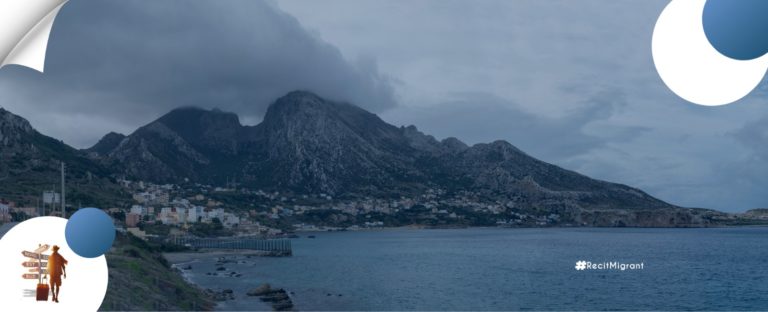
In late July 2026, the Spanish enclave of Ceuta went through a migration crisis of historic magnitude. More than 70,000 people crossed the border from Morocco into Spanish city of Ceuta, either by swimming or on foot, on 30 and 31 July 2026. This sudden influx resulted in dozens of deaths by drowning and overstrained local reception capacities. The crisis triggered by this incident has reignited the debate on the effectiveness of migration cooperation policies between Africa and the European Union. Between the root causes of irregular migration and the quest for a better future, in an exclusive interview with Dialogue Migration, Nidal Benali, President of the Moroccan Network of Local Youth Councils, discusses the limitations of current responses and the alternatives that should be prioritised.
In your view, what are the main reasons that still drive many Africans to venture across despite the risks?
Irregular migration is a complex topic, and it would be wrong to seek a single explanation. Of course, economic hardship and unemployment play a major role. But there is also a greater sense of hope and how people feel about the future. When a young person cannot clearly see how their education, hard work or efforts can help them improve their circumstances in their own country, the idea of leaving sometimes becomes an appeal.
There is also an extremely romanticised view of life in Europe, particularly on social media. Success stories are widely shared, whilst the struggles faced by some migrants are far less visible.
We must therefore recognise that behind every attempt at migration stands an individual story. Some people are fleeing tough economic circumstances, others are seeking professional or educational opportunities, and still others simply want to be able to build a life they regard as dignified.
It is not our responsibility to pass judgement on these aspirations. Rather, it is our duty to help ensure that migration is a choice and not a necessity.
Do cooperation policies between African countries, including Morocco and the European Union truly address the challenges of irregular migration, viewed through the lens of the crisis in Ceuta?
Significant efforts are being made, but I believe we must shift our approach to the issue.
Migration cannot be treated solely as a matter of security or border control. A border may temporarily keep someone from crossing; however, it does not address the reasons that drove them to leave in the first place.
We must therefore take action much earlier on. This entails investing in education, employment, entrepreneurship, regional development and legal mobility.
There also needs to be a more balanced approach to cooperation between Africa and Europe. We must focus not only on irregular migration, but also on academic mobility, professional mobility and the movement of skilled workers.
A young person with a legal opportunity to study, work temporarily or build international experience will be far less inclined to venture down dangerous routes.
The situation surrounding Ceuta must therefore prompt us to consider not only the border itself, but above all what causes people to risk their lives to cross it.
What impact does the Ceuta situation have on relations between African States and Europe, particularly with regard to mobility and development?
In a way, Ceuta embodies the complexity of the relationship between Africa and Europe.
We are geographically extremely close and our economies, societies and histories are deeply intertwined. Yet this closeness clashes with the mobility challenges that many Africans are facing.
Each migration crisis has the potential to reinforce a security-first approach. However, if mobility becomes solely associated with risk or threat, we miss out on its benefits.
Mobility can be a valuable source of development when it is properly regulated. Students who go abroad to study, entrepreneurs who build international networks, or professionals who acquire new skills can subsequently contribute to the development of their own countries.
We must therefore work to ensure that crisis situations do not result in further restrictions on opportunities for legal mobility. The future of Africa-Europe relations must be based on a genuine partnership in which we address mobility, investment, education, employment and development at the same time.
What practical solutions should African Governments prioritise to offer young people more credible alternatives to irregular migration and to fulfil their expectations of socio-economic fulfilment?
The first step is obvious but fundamental. There must be more opportunities.
Young people must be able to visualize their future in their own country. This requires employment opportunities, but also an education system responsive to changes in the labour market, an environment friendly to entrepreneurship, and fairer access to opportunities.
We must invest extensively in skills. Digital technology, renewable energy, modern agriculture, the creative industries and many new fields can offer promising prospects for African youth.
We must also provide greater support to regional areas. Not everyone can – or should be forced to – move to a capital city to become successful.
We must provide young entrepreneurs with easier access to funding, but also offer them support. Providing funding without mentoring, without a network and without access to the market is not adequate.
Finally, we must further boost mobility within Africa. Rather than systematically looking beyond the continent, let us give youngsters the possibility to study, work and start businesses elsewhere in Africa.
The goal should never be to prevent young people from travelling. Travelling, studying and exploring the world are sources of enrichment. The real aim is for young people to be free to decide whether to leave, stay or return, without being obliged to risk their lives in search of a dignity elsewhere that they believe is beyond their reach at home.