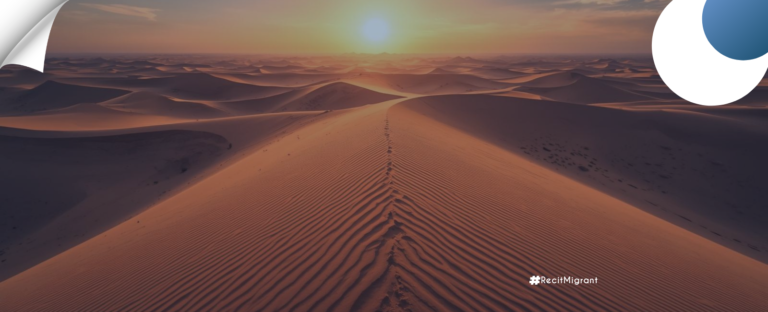
The village of Assamaka, a border post situated in the vast expanse of the Nigerien Sahara, has evolved from a mere transit point. In 2025, it became the epicentre of an unprecedented migration crisis. Statistics documented by the organisation Alarme Phone Sahara (APS) reveal a stark reality: 34,236 people were pushed back from Algeria to Niger over the course of the year. This figure represents a significant escalation compared to the trends observed in 2024. While the previous year already reflected rigid security management, 2025 saw the border become a theatre of systematic and large-scale expulsion.
Unyielding calculations of Point Zéro
The organisation of forced migration in 2025 is based on a two-category logistics system. On the one hand, there are the so-called “official” convoys. These mainly transport Nigeriens who arrive by truck at the Assamaka centre. The method of “unofficial” convoys applies to nationals from sub-Saharan Africa. These groups, including people from Mali, Guinea, Côte d’Ivoire and Cameroon, are subjected to a different form of treatment.
Algerian security forces would usually abandon these exiles at “Point Zéro”. This place symbolises the geographical violence of pushbacks. Situated in a neutral zone deep in the desert, it lies fifteen kilometres from the first Nigerien settlements. Those expelled must cover this distance on foot in extreme temperatures without water or initial assistance. In 2024, smaller groups were reported. In 2025, however, the size of the groups left in the desert has increased, indicating an accelerated pace in emptying Algerian detention centres.
The list of nationalities at the border has grown longer. It now includes citizens of Nigeria, Sudan and Mali, who are fleeing conflict zones only to find themselves trapped in a lawless area. This diversity of origins suggests that Algeria is not merely regulating its immediate border, but rather carrying out a broad sweep of foreign populations within its territory.
Flesh and dust: the human cost of pushbacks
The human toll of 2025 goes beyond mere administrative statistics. Field observers report that the physical condition of those arriving has deteriorated. Unlike the 2024 movements, the 2025 convoys systematically include highly vulnerable groups. Pregnant women, very young children and infants are among those expelled. A particularly striking case occurred in August 2025, when a blind man was left at Point Zéro and forced to navigate the dunes in order to survive.
Physical violence often accompanies the journey. Many migrants arrive in Assamaka with open wounds or trauma related to their previous detention. Before being pushed towards the border, they are stripped of their belongings. Phones, which are essential for survival and staying in contact with family, are confiscated. Cash and personal effects also disappear. This leaves individuals with no resources whatsoever to organise what comes next or to plan their return.
In 2025, there were a lot of deaths along this route. Seven fatalities were officially recorded in Assamaka. On 2 March, a Malian national died from injuries sustained in an assault. In April, three bodies were found in the sand; the victims had succumbed to exhaustion. Two more lives were lost in September. The victims were buried on site in unmarked graves dug by NGO members or local authorities. The increase in mortality compared to 2024 reflects the brutalisation of expulsion methods. The desert is no longer just a natural barrier; it has become a tool of repression.
Assamaka’s deadlock and the weight of geopolitics
The humanitarian situation in Assamaka has now reached breaking point. The village, which was designed to accommodate only a few hundred people, is now home to thousands. The International Organisation for Migrations (IOM) transit centre is operating at full capacity. Access to essential services is strictly regulated. Aid is conditional on acceptance of the “voluntary return” procedure. This administrative framework prevents many individuals from leaving if their nationality cannot be quickly confirmed by their respective consulates.
Prolonged waiting in the sun generates social tensions. In November 2025, groups of Nigerians protested against being forced to live in the camp. Feeling trapped can drive people to desperate acts. Attempts to flee on foot towards the town of Arlit, which is several days’ walk away, are regularly reported. In response, the IOM has tightened its disciplinary measures at times, even excluding certain individuals from food assistance programmes.
In the face of this institutional vacuum, Alarm Phone Sahara deploys emergency resources. Their motorised tricycles cross the desert daily to collect the injured and exhausted at Point Zéro. Drinking water, food and basic shoes provide these thousands of men and women rejected by Algeria with their last safety net. These local interventions help to compensate for the lack of secure humanitarian corridors.
The crisis on the Nigerien border is not an isolated incident. It stems from regional migration policies and agreements between the European Union and the Maghreb countries. Increased surveillance of the Mediterranean coastline is pushing the problem further south. Like Tunisia, Algeria carries out chain pushbacks to keep migrants away from the European border. Assamaka thus becomes a dead end for international border security. Census data on arrivals shows that this trend is not weakening. Despite the documented risk of death, the expulsion mechanism continues to accelerate, turning northern Niger into an area of ongoing distress.