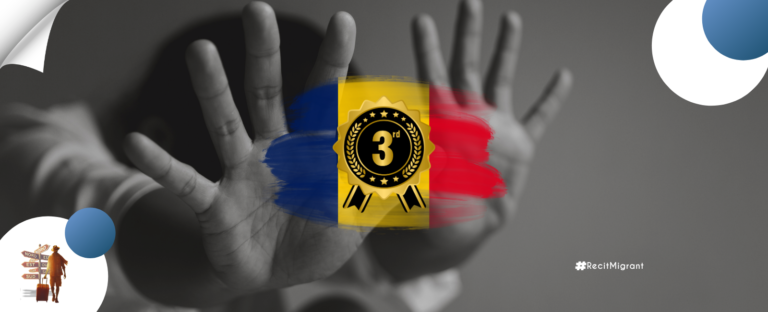
On October 9, 2026, the U.S. State Department released its annual report on human trafficking. For Chad, the results are clear: the country still ranks at Tier 3, the lowest category in this international ranking. The US government believes that Chadian authorities lack full compliance with the minimum standards for the elimination of human trafficking and are not making significant efforts to meet them.
This ranking does not merely evaluate the existence of the phenomenon; it assesses a country’s capacity to prevent trafficking, prosecute perpetrators, protect victims and implement a consistent public policy. The report paints a largely negative picture of Chad, while acknowledging a few signs of commitment—which it deems unsatisfactory.
A Lack of Judicial Outcomes
The most concerning aspect of the report is the lack of criminal enforcement. During the period covered by the assessment, no investigations, prosecutions, or convictions of traffickers were reportedly recorded in Chad, the report reveals. Read also: “Trapped Behind the Scam”: When Victims of Trafficking Become Tools of Cybercrime
The National Commission to Combat Trafficking in Persons (CNLTP) is also at the center of the criticism. The report indicates that it continues to be “not fully operational” for the second consecutive year. Yet this body is supposed to coordinate the actions of ministries, security forces, technical and financial partners, as well as civil society organizations. Its limited effectiveness weakens the entire response chain: victim identification, referral, investigations, prosecutions, and reintegration.
For those working on the front lines, this assessment reflects a reality often described: mechanisms exist on paper but struggle to deliver visible results.
Particularly Vulnerable Populations
The report notes that human trafficking in Chad primarily affects talibé children, women and migrant workers. These groups suffer from multiple factors of vulnerability: poverty, displacement, isolation, economic dependence, low access to information and a lack of awareness of their rights.
This warning comes against a sensitive regional backdrop with Chad hosting large refugee populations and serving as a transit country for complex migratory flows. Recent international reports underscore that conflicts, forced displacement and migration routes further expose women, children and migrants to exploitation, domestic servitude, forced labor, or sexual violence.
The U.S. report does not focus solely on shortcomings. It highlights three positive developments: the identification of a victim—the first in three years; the signing of a bilateral agreement aimed at protecting Chadian workers abroad; and the enactment of an executive order against violence against women and girls.
What the United States Expects from N’Djamena
The State Department makes clear recommendations. It calls on the Chadian government to make the CNLTP fully operational, to carry out investigations and to prosecute traffickers, including public officials suspected of complicity. It also calls for enhanced identification, protection, and assistance for victims.
These recommendations are not just an external demand. They affect the State’s credibility in the eyes of its most vulnerable citizens. Combating trafficking requires resources, but also unwavering political will: training investigators, funding shelters, securing witnesses, raising community awareness and ensuring that no perpetrator goes unpunished.
Chad Must Send a Strong Signal
Chad’s continued classification at Tier 3 sends a strong political signal. It places the country alongside other countries and territories perceived as insufficiently committed to combating this crime, including Sudan, South Sudan, Eritrea, Afghanistan, Iran, Russia and Cuba.
For N’Djamena, the challenge now goes beyond mere international image. It is a case of proving, through verifiable actions, that the protection of talibé children, women, migrants, and refugees is not merely a wish list but a national priority. The next steps will be closely monitored: effective investigations, trials, convictions and a truly operational CNLTP would be the first indicators of tangible change.