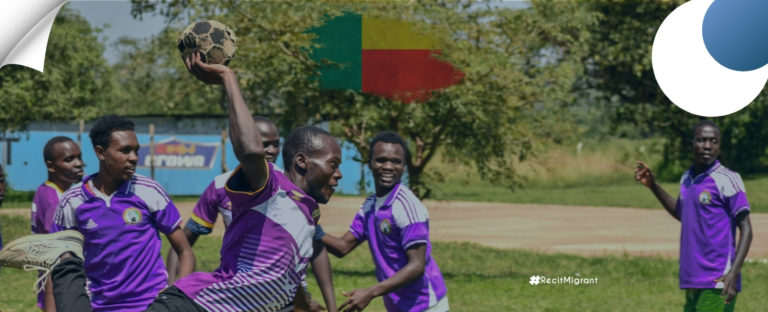
The number of international player transfers shows how attractive handball sport has become. In Benin, as with other sports, professional handball is evolving and gaining recognition.
By 2025, more than fifty foreign athletes had joined clubs competing in Benin’s professional handball championship. This trend reflects the country’s growing appeal among key stakeholders in African handball. Benin is thus emerging as a destination for African talent seeking competitive opportunities, visibility and institutional stability, while also supporting the strategic development of handball within its elite sports ecosystem.
The presence of foreign athletes in the Beninese championship has grown steadily over the past four years. This upward trend clearly demonstrates the national championship’s growing attractiveness and the confidence placed in it by players from other backgrounds.
This increase in prominence is occurring alongside the growing organisation of Beninese sport, which has been supported by reforms implemented by the national sports authorities and the Benin Handball Federation (FBHB) over several years.
According to data available to Dialogue Migration, foreign players have become a regular feature of professional handball clubs. This was evident during the 2025 Moov Africa Ligue Pro 1 play-offs, with every competing team including at least one international player.
For many sports specialists, this trend reflects the growing competitiveness of the Beninese championship, establishing Benin as a focal point for visibility and opportunities for stakeholders in African handball. This aligns with the continental momentum promoted by the African Handball Confederation (CAHB), which encourages competitiveness and the circulation of talent within African leagues.
Key indicators
The figures speak for themselves. Nearly a quarter of the players licensed to take part in the 2025 Moov Africa Ligue Pro 1 play-offs are non-nationals, which is a highly significant statistic in professional sport.
Of the 230 licences issued by the Benin Professional Handball League for this final phase, 58 players were from other countries. Most of these players came from countries with a strong handball tradition, such as Nigeria, Côte d’Ivoire, Cameroon, Senegal and Angola.
More specifically, 37 players were from Nigeria, while Angola, Côte d’Ivoire, Cameroon and Senegal accounted for 13, four, three and one athletes respectively. At some clubs, non-national players account for nearly half, or at least a quarter, of the total squad, which illustrates the championship’s openness and its growing international dimension.
Benin as an intermediate career platform
Key data indicate an increasingly structured regional mobility, a steady rise in sports migration and the emergence of a new geography of African sports mobility.
This circulation of athletes has made the Beninese championship a pivotal stage in the professional development of African handball players, providing a familiar cultural and geographical environment.
This predominantly South–South mobility illustrates a significant change: Africa is gradually becoming a space for the internal circulation of sporting skills, thereby reducing its exclusive dependence on European markets.
This diversity improves the technical quality of competitions and raises the profile of Beninese handball in Africa. It is a powerful driver of sub-regional integration and competitiveness within the sport. Consequently, the Beninese championship serves as a strategic intermediary platform for African athletes, connecting local leagues with the more organised markets of Southern and Northern Africa, as well as Europe.
In the medium term, this could strengthen Benin’s sports diplomacy, establishing handball as one of the country’s flagship sports on the international stage.
Toward an African model for the circulation of sports talent
The growing popularity of handball in Benin raises important questions for public sports policy in Africa, beyond athletic performance. It demonstrates the capacity of sport to promote regional collaboration, facilitate organised movement, and act as a means of sports diplomacy.
In a context where specialised platforms such as Dialogue Migration (DM), the International Organization for Migration (IOM) and the African Union (AU) are advocating for better governance of professional mobility, the example of Benin offers a relevant case study.
It shows that organised and regulated sports migration can drive local development, transfer skills, and increase international visibility.
Beninese handball therefore represents a significant shift — from a model that has long centred on exporting talent, to one that is progressively developing its own markets, circuits and opportunities.
In doing so, Benin is establishing itself as a model for contemporary African sports mobility, grounded in regional proximity, institutional organisation, and the promotion of homegrown talent.