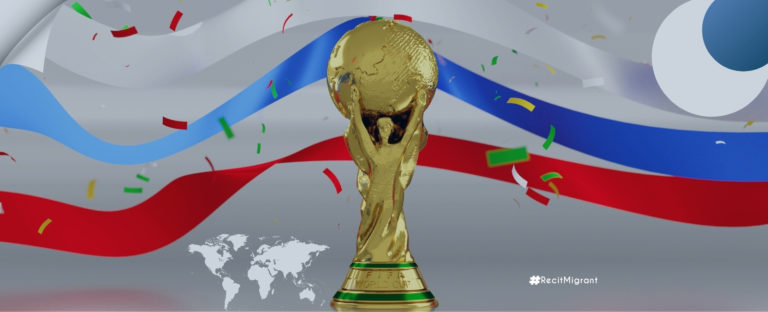
The 2026 World Cup, which is to be co-hosted by the United States, Canada and Mexico, will feature a new format. Rather than the 32 teams that have competed in recent editions, 48 teams will compete this time. This expansion means more nations, particularly from Africa, will have the chance to qualify for the tournament. Several teams had already secured their place by the end of 2025: Morocco, Senegal, Egypt, Algeria, Ghana, Cape Verde, the Cote d’Ivoireand South Africa. The Democratic Republic of Congo will participate in the intercontinental play-offs. For these nations, as well as those still in the running, qualifying represents a significant sporting achievement and a source of national pride. It also offers the hope of increased exposure for local football, as well as development opportunities for players, staff and supporters.
Travel bans and restrictions
However, one major obstacle remains: the migration policies of host countries, particularly those of the United States. In 2025, the US administration imposed a ‘travel ban’, prohibiting entry or imposing severe visa restrictions on citizens of many countries, primarily in Africa and the Middle East.
Some of the affected countries are directly impacted by these restrictions. These include Haiti, the Democratic Republic of Congo, Senegal, Côte d’Ivoire and Iran, all of which are listed as being subject to enhanced restrictions.
Visa-qualified countries vs. restricted countries
Some national teams have qualified for the 2026 World Cup. However, these countries are among those subject to total or partial travel bans.
In theory, players, coaches and technical staff are exempt, meaning they will be able to enter the United States despite the restrictions, thanks to a special clause for major sporting events.
The situation remains uncertain for supporters, families and ordinary citizens of these countries, as they may face visa difficulties, refusal of entry or other restrictions. Supporters of countries such as Iran, which are also on the travel ban list, for example, may be denied stadium access despite their team qualifying.
Why has this travel ban been imposed?
According to the US administration, the targeted countries either have ‘deficient verification procedures’ or a history of difficulties in accepting the return of their deported nationals. Although this policy has existed for several years as part of a framework for national security and immigration control, applying it to a global event such as the World Cup creates a dilemma: how can the openness of sport and the universality of football be reconciled with restrictive entry policies?
What will be the concrete impact on the World Cup and the principle of universality?
For the teams: Nothing will fundamentally change if they are exempt. Players, staff and officials will be able to travel as normal. However, there is uncertainty surrounding the conditions of reception, visibility, fan support and morale, all of which are essential elements of an international tournament.
Millions of fans, including supporters and members of the diaspora, risk being denied access, either because their country is subject to restrictions, or because they will not be prioritised. This would not only reduce the collective experience and popular support, but also the economic impact, including tourism, ticket sales, discounts and accommodation.
For the image and ethics of football: A sport that symbolises peace, unity and universality is now being affected by restrictive migration policies. Some are denouncing the disconnect between sporting values and geopolitical realities.
For sports diplomacy: Tensions may arise between the countries involved, sports federations and host countries. For instance, the Iranian Football Federation (FFIRI) threatened to boycott the draw unless visas were granted.
Challenges and consequences for Africa and football around the world
Increased inequalities mean that fragile countries are excluded from the global celebration for political reasons rather than a lack of sporting merit.
Supporters’ communities are fragmented, with diaspora, families and fans limited in their ability to travel. This results in a loss of cohesion around national teams.
The ‘soft power’ of the affected countries is weakened, as it becomes impossible to generate the emotion, visibility and media coverage that a World Cup would provide.
There is pressure on African federations to arbitrate between sporting opportunities and geopolitical realities, which will have long-term consequences for the development of football.
The 2026 World Cup is set to be one of the biggest sporting events of the decade. However, the travel ban affecting certain countries, including some serious competitors or candidates, calls into question the universality of football.
Qualifications, national flags, children’s dreams and supporters from around the world are all under threat. These elements may come into conflict with political realities, such as entry refusals, visa restrictions and exclusions. If the World Cup is to remain a truly global celebration, states, federations and organisers must prioritise inclusion over barriers.