
In both Africa and Europe, news surrounding migration in September have focused on initiatives aimed at inclusion, while also highlighting the ongoing tragedies along migration routes and the tightening of border control policies. Whilst some countries are putting in place structures to host and support migrants, tensions at Europe’s borders and debates on the protection of migrants are still at the top of the news coverage.
In Chad, the inclusion of refugees in the education system is the focus of a new initiative, led by The United Nations High Commissioner for Refugees (UNHCR) and the Jigsaw Project involving refugee teachers in research projects as peer researchers. The aim is to provide a better understanding of their experiences and to help improve education systems. The initiative hopes to strengthen their autonomy and well-being as well.
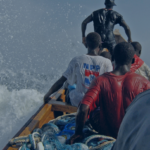
Meanwhile, in Mauritania, a canoe that had departed from The Gambia capsized on 13 September with a seven-year-old migrant girl reported dead and 27 people still unaccounted for as of 16 September. According to survivor accounts cited by the Association of Senegalese Residents in Nouadhibou, 65 people, including eleven women, were on board the vessel.
In Nigeria, the issue of migrants’ return is also hitting the headlines. Enugu State’s Governor Peter Mbah announced financial aid of 77 million naira intended for 77 families repatriated from South Africa. These families include 112 people from Enugu State who had to move back due to the resurgence of xenophobic violence. Local authorities have also identified an additional 42 returning families, in collaboration with the Commission for Nigerians Abroad.
At a continental level, an Afrobarometer survey sheds some light on African populations’ views on migration. Conducted amongst 50,961 people in 38 countries between 2024 and 2025, the findings show a broad acceptance of ethnic, religious and national differences. Nonetheless, the survey points to greater reservations regarding foreigners and refugees. These findings thus highlight a discrepancy between the openness towards social diversity and some level of reluctance towards immigration.
In Morocco, the authorities have published a report assessing their efforts to curb irregular emigration for the year 2025. According to official statistics, 73,640 attempts at irregular departure were intercepted and more than 300 smuggling networks were dismantled. The authorities also report that 13,595 migrants were rescued at sea and received medical and humanitarian assistance. These operations are described by officials in Morocco as part of a more “humane approach to border management”. At the same time, the kingdom has reasserted its commitment to maintaining close cooperation with Spain on migration and security issues. In a statement published on 10 September, Morocco’s Foreign Affairs department reiterated the importance of good neighbourly relations and the partnership between the two countries.
In Spain, the situation surrounding Ceuta continues to be particularly volatile following the mass influx of migrants recorded in late July. Whilst the majority of the 70,000 plus people who reached the Spanish enclave have headed back to Morocco, several thousand are still there. Residents of the small town have protested regularly, calling for a return to normality into their lives and city. In response to the remainees’ need for accommodation, the Spanish authorities set up a new reception centre on 13 September with a capacity of 864 places.
The crisis in Ceuta comes against a backdrop of the European Union stepping up its response to migration flows. In her State of the Union address on 16 September in Strasbourg, the European Commission chair, Ursula von der Leyen, announced plans to toughen external border controls. She also called for the creation of an ‘emergency response framework for migration crises’ to deal with mass flows at the borders. According to the figures she provided, irregular arrivals in the European Union are said to have fallen by 55% in two years and by 35% in 2026.
In the Canary Islands, the 82 Senegalese nationals detained on the island of El Hierro were released after the statutory 60-day detention period had expired. They had been placed in detention pending collective deportation under the European Pact on Migration. Their asylum applications, lodged in the meantime, have now suspended their deportation until their cases have been considered by the Spanish authorities.
Last but not least, in Las Palmas de Gran Canaria, issues surrounding migrants’ rights and relations with the security forces have also been brought before the courts. Isabel Alfaro, Chairperson of the National Federation of Immigrant and Refugee Associations in Spain, will appear in court over comments she made at a meeting that followed the death of Abdoulie Bah, a 19-year-old Gambian shot dead by the police in May 2025 at the entrance to Gran Canaria airport. The Public Prosecutor’s Office and the private plaintiff have requested a 4,050 euros fine for contempt of the security forces.