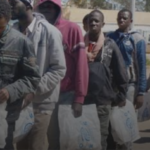

Deadly shipwrecks in the Mediterranean, rescues in the Atlantic, mass departures from the West African coast and the tougher European migration policies have made headlines in October. These occurrences highlight the persistent dangers of the routes taken by those seeking exile.
In Senegal, three canoes carrying 190 Senegalese nationals, including some 60 children, arrived on 4 October in Dakhla, in southern Morocco. According to an authorised source cited by the Senegalese Press Agency (APS), the boats had set sail from The Gambia and Saint-Louis bound for Spain. The large number of minors, some of whom were with family members, raises particular concerns around child protection.
A few days later, on 15 October, 53 people attempting to migrate irregularly, including one Malian national, were rescued off the coast of Mboro-sur-Mer after their boat’s engine broke down. When alerted, the local police were assisted by fishermen and firefighters from the town of Tivaouane in coming to the rescue of the passengers. These incidents serve to illustrate the risks faced by those attempting to leave the country, even within close proximity to the coast.
In Senegal, too, the protection of migrants’ rights ranks among the priorities that are championed by the relevant institutions. On the sidelines of the 89th ordinary session of the African Commission on Human Rights and Peoples’ Rights, held in Dakar from 12 to 21 October, the Chair of the National Human Rights Commission, Amsatou Sow Sidibé, pleaded for greater protection for migrants in conflict with the law. She also called for the mainstreaming of gender considerations into the foreign policies of African states.
In Morocco, in North Africa, the Royal Navy intercepted a small boat on 15 October carrying 200 sub-Saharan migrants, including 124 Senegalese. Many women and minors were among those rescued. Meanwhile, at the opening of the new Parliament’s first session on 9 October, King Mohammed VI acknowledged that the current model of migration cooperation had ‘reached its limits’, in reference to the repeated crises observed at the borders. This statement clearly echoes the events that took place last July in Ceuta, when more than 70,000 people crossed into the Spanish enclave from Moroccan territory. The King therefore announced the need to adapt the Kingdom’s approach to migration cooperation.
In Europe, migratory pressure remains particularly high along the Atlantic route. In Spain, over the weekend of 17 and 18 October, the emergency services rescued 352 migrants during three operations off the coast of the Canary Islands. Three bodies were also found. Among those rescued there were women and minors, as well as nationals from several countries in West and Central Africa, including Gambia, Guinea, Mali, Senegal, Ghana and Cameroon. These rescue operations highlight the continuing risk of crossings to the Spanish archipelago, despite the dangers associated with sailing across the Atlantic.
In Greece, two incidents that occurred on 19 October in the Aegean Sea claimed the lives of twelve migrants, including an infant, off the coast of the islands of Lesbos and Samos. According to the Greek coastguard, six people lost their lives in each of the two incidents. Off the coast of Lesbos, the victims included four women, one man and a baby, whilst eight people survived. These latest tragedies serve as a stark reminder of the dangers of the sea routes used to reach Europe and the vulnerability of those who embark on them.
In France, the courts have handed down their verdict in one of the deadliest shipwrecks in the English Channel. Thirteen men have been sentenced to up to 10 years in prison for their role in the deaths of 31 migrants who were attempting to cross to the United Kingdom in November 2021 aboard a makeshift vessel. Several of the defendants claimed that they had themselves been asylum seekers and had been manipulated by people-smuggling networks. The court nevertheless held them liable for this tragedy, highlighting the legal consequences of practices that expose migrants to deadly crossings.
For its part, the United Kingdom announced the end of the Franco-British ‘One in, one out’ agreement, struck in the summer of 2025 to organise the exchange of migrants between the two countries. London stated that no new cases would be processed under this pilot scheme, the trial period of which was due to expire on 1 October. This agreement, which had been criticised by human rights advocacy groups, was one of the cooperation measures aimed at regulating crossings of the English Channel.
Finally, the British authorities announced the suspension, with effect from 15 October, of fast-track visa procedures for Eritrean government officials. Diplomats from that country are also subject to travel restrictions: any journey beyond a 60-kilometre radius of London must now be authorised by the British Foreign Office. In November 2025, the visa weapon had already been brandished against Namibia, Angola and the Democratic Republic of the Congo (DRC).