
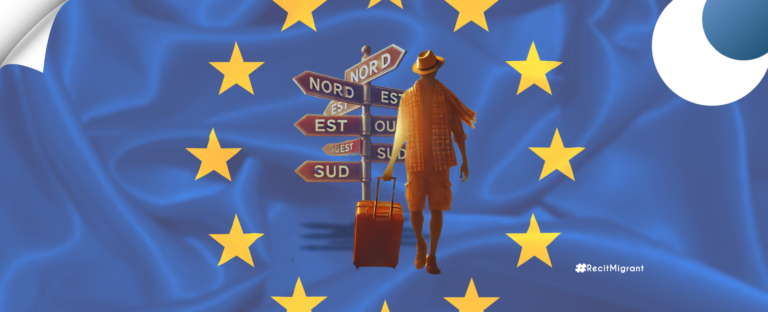
Armed conflicts are one of the main drivers of forced displacement in Africa. Unlike what is widely portrayed in public debate, however, people fleeing African wars are not heading en masse to Europe. The majority of them choose to remain in their own country or in neighbouring states. The available evidence therefore suggests we should make a distinction between displacement, international migration and exile to Europe.
In the media and political debates, African migration is often associated with scenes of overcrowded boats crossing the Mediterranean, people being rescued at sea or migrants arriving on European shores.
Such images do exist. They bear witness to migration journeys that are sometimes extremely perilous and to conditions of extreme vulnerability. However, on their own, they do not provide a complete picture of the full range of African migration patterns.
One question therefore worthy of consideration is: are African wars really causing a mass exodus of people towards Europe?
The data paint a more subtle picture: conflicts do indeed cause mass displacement, but this is predominantly internal or regional. Europe is not the primary destination for people forced to flee African conflicts.
Conflicts Compelling Millions to Move
The reality of forced displacement is staggering. According to the United Nations High Commissioner for Refugees (UNHCR), 123.2 million people were forcibly displaced worldwide by the end of 2024, as a result of persecution, conflict, violence, human rights violations or serious events disrupting public order. This figure represents approximately one in every 67 people worldwide.
However, it is important to differentiate between several categories straight away: refugees, asylum seekers and internally displaced persons. This distinction is key to understanding the situation in Africa.
A person who flees an attack on their village and finds refuge in another region of their country is displaced, but is not legally a refugee. Another person who crosses an international border to seek protection may become an asylum seeker or, depending on their circumstances, a refugee.
However, a large proportion of those forced to flee never cross an international border.
Data from the Internal Displacement Monitoring Centre (IDMC) show that by the end of 2024, 83.4 million people worldwide were internally displaced, a record high. Among them, around 90% had fled conflict or violence.
Africa As a Continent Heavily Affected by Internal Displacement
Africa particularly illustrates this trend. According to the IDMC, the number of people living as internally displaced persons due to conflict and violence in Africa rose from 10.2 million in 2009 to 32.5 million in 2023. The number has therefore more than tripled in fifteen years.
And these displacements are highly clustered. Sudan, the Democratic Republic of the Congo, Somalia, Nigeria and Ethiopia alone accounted for nearly 80 per cent of internally displaced people due to conflict and violence in Africa by the end of 2023.
Sudan A Case Study
The war that broke out in April 2023 between the Sudanese Armed Forces and the Rapid Support Forces triggered a major humanitarian crisis. By the end of 2024, 14.3 million Sudanese were displaced, according to the UNHCR, making Sudan the world’s largest displacement crisis that year. But it would be a misconception to imagine that these millions of people headed for Europe. A large proportion remained in Sudan or moved to neighbouring countries.
Fleeing War Does Not Necessarily Mean Going Far Away
When a population is caught up in a war, the primary concern is usually safety. The destination is therefore often determined by proximity. A family fleeing the fighting will usually seek refuge first in a neighbouring village, a less exposed town, or a region controlled by the authorities or groups offering greater security.
If they must cross a border, the neighbouring country is often the first option. This approach is driven by very practical considerations: the cost of travel, geographical accessibility, the presence of family members, cultural and linguistic similarities, familiarity with the landscape and the possibility of returning easier to their country of origin once the circumstances improve.
Forced migration is therefore not automatically synonymous with intercontinental migration.
Neighbouring Countries Bear a Large Share of the Burden
This reality is also reflected in global statistics. The UNHCR highlights that 73 per cent of refugees were hosted by low- and middle-income countries by the end of 2024.
In other words, the richest countries are not the ones welcoming the majority of refugees on a global scale.
In Africa, States that are struggling with significant economic and social pressures themselves are hosting populations who have fled conflicts in neighbouring countries. This situation highlights a reality often overlooked in European debates: the bulk of the reception of African refugees frequently takes place in Africa itself.
The host country may be grappling with its own problems of unemployment, poverty, housing, access to education or food security. Yet it remains a safe haven for displaced people.
Sudan As a Striking Example
Sudan provides a particularly clear insight into the narrative of an ‘exodus to Europe’. The war has led to massive displacement within the country, but also towards neighbouring States.
Chad, Egypt, South Sudan, Ethiopia and Libya have been particularly impacted by the movement of Sudanese populations. The logic is simple: when the nearest border offers a way to escape the fighting, it often becomes the first destination.
Movement towards Europe may occur at a later stage, especially when exile is prolonged, living conditions in neighbouring countries are becoming difficult, or prospects for protection and employment are scarce. However, one must not mistake initial displacement for subsequent mobility. A person may be displaced multiple times during their journey.
DRC Showing the Same Pattern
The Democratic Republic of the Congo is another key example of this.
In the east of the country, clashes between armed groups and government forces have been causing large-scale displacement for years.
In 2023, the DRC was among the world’s main hotspots for conflict-related displacement. The IDMC highlights that the conflicts in Sudan and the DRC accounted for a large proportion of new conflict-related displacements in Africa.
Here too, displaced populations do not automatically head for Europe. While some stay in their home province others move to other regions within DRC.
Still others will cross the borders into Uganda, Burundi, Rwanda or other neighbouring countries, showing that physical proximity remains a key factor.
Why, Then, Does Europe Seem So Prominent?
Whilst the majority of migration flows are within Africa, why does African migration to Europe feature so prominently in European public debate? There are several factors that may explain this.
The first is media coverage.
A boat landing on a European beach is far more noticeable than a family displaced to a rural area in Sudan, Burkina Faso or the DRC.
The second is political focus.
Arrivals at European borders are the target of specific policies, parliamentary debates, control measures and extensive media coverage.
The third is the dramatic nature of migration routes.
Crossings of the Mediterranean, rescue operations and shipwrecks are widely covered by the media. This visibility can give the impression that these movements represent the entirety of African migration.
However, visibility does not mean statistical representativeness.
War Is Not Necessarily Synonymous with Migration
Another misconception needs to be clarified: not all African migrants are fleeing war.
African migration is triggered by a multitude of factors: education, work, trade, family reunification, the search for better economic opportunities, seasonal mobility, environmental concerns, marriage or even family strategies.
War is a key factor in forced migration, but it does not account for all African migration.
It is therefore misleading to portray Africans arriving in Europe as a homogeneous group of refugees fleeing conflict.
A Togolese student going to study in France, a Beninese trader working in Côte d’Ivoire and a Sudanese family fleeing a war do not share the same migratory experience. Grouping them together makes it harder to understand migration patterns.
A Matter of Migration Policy
These findings have significant ramifications for migration policy.
If African migration is viewed primarily as a threat of a ‘mass exodus to Europe’, the responses are likely to prioritise border closures and disincentives.
However, the statistics show that the main challenges lie elsewhere: protecting internally displaced people, supporting countries neighbouring conflict-prone areas, ensuring access to essential services, conflict prevention and creating sustainable solutions.
Europe clearly has a role to play in international protection and migration management. But it is only one component of a much broader migration system. African countries hosting refugees and displaced people also need more resources and greater international cooperation.

![[Press review]Migration: Striking a Balance Between Inclusion, Border Control](https://migration.africtivistes.org/wp-content/uploads/2026/10/Ines-3-_-Revue-de-presse-_-La-migration-entre-inclusion-et-controle-des-frontieres-150x150.png)