
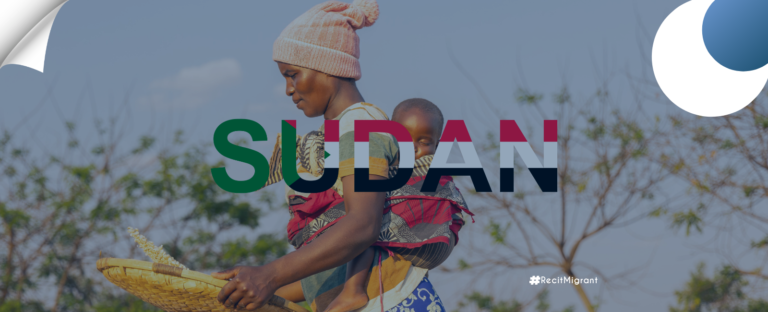
One thousand days after the outbreak of war, displacement can no longer be considered a short-term response to the crisis in Sudan. It has become a long-term condition for millions. The prolonged conflict has generated the world’s largest displacement crisis, which disproportionately affects women and children, according to the United Nations.
Since April 2023, fighting between the Sudanese Armed Forces and the Rapid Support Forces has caused widespread and repeated displacement. According to the latest UN data, 9.3 million people have been displaced internally, while more than 4.3 million have fled to neighbouring countries, placing considerable strain on them. As the conflict drags on, exile ceases to be a temporary interruption and becomes a long-term condition, sometimes with no prospect of return.
In this prolonged period of forced migration, women find themselves at the forefront. Many have fled alone with their children after the men in their families disappeared or were separated from them. The figures illustrate this heightened vulnerability. According to OCHA, nearly 12 million people, mainly women and girls, are exposed to gender-based violence. Households headed by women are now three times more likely to experience food insecurity, with three-quarters reporting that they do not have enough to eat. These women have effectively become heads of household, forced to ensure their own survival and that of their families in a context of limited resources and persistent insecurity.
Children are paying a disproportionate price for the length of the conflict. According to UNICEF, around 5,000 children have been displaced every day since the war began. Many have been displaced multiple times, with violence catching up with them at every attempt to find refuge. Some are born in exile, while others grow up in camps or informal settlements, lacking regular access to education, healthcare and adequate food. The war not only robs them of their immediate security, but also jeopardises their future.
The food crisis further entrenches this pattern of prolonged exile. According to the United Nations, over 21 million Sudanese face acute food insecurity. In several regions – particularly Darfur and Kordofan – fighting continues, cities remain under siege, and access to food, healthcare, and markets is extremely limited. Even in the capital, Khartoum, where some displaced people attempt to return, the presence of unexploded ordnance makes daily life both dangerous and uncertain.
After a thousand days of war, the prospect of returning home for many has become distant, if not unrealistic. Their places of origin have been destroyed, civilian infrastructure has been targeted and a lack of security prevents any lasting reconstruction. For women and children, exile is no longer a temporary measure dictated by emergency; it has become an entrenched long-term reality.
This situation is exacerbated by insufficient humanitarian aid. In 2025, funding was only secured for 36% of the $4.2 billion requested to respond to the crisis. For 2026, OCHA plans to support 20 million of the 34 million people expected to require assistance, at a projected cost of $2.9 billion. The disparity between needs and available resources underscores the waning of international mobilisation in the face of a protracted crisis.
One thousand days into the conflict, the situation of Sudanese exiles can no longer be considered temporary and managed as an emergency. Instead, it has become a long-term condition characterised by precariousness, insecurity and an absence of clear prospects. For millions of women and children, forced migration is no longer just a stage before returning home; it is now a permanent reality that is reshaping both their present and their future.
When a war drags on, the exile it forces upon people becomes a permanent reality. In Sudan, after a thousand days of conflict, leaving has become the norm. For many, it has become a permanent way of life, with consequences that will affect future generations.


![[Press review]Migration: Striking a Balance Between Inclusion, Border Control](https://migration.africtivistes.org/wp-content/uploads/2026/10/Ines-3-_-Revue-de-presse-_-La-migration-entre-inclusion-et-controle-des-frontieres-150x150.png)