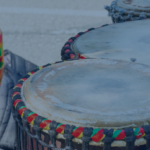
Art and music play a central role in Togolese identity, with artists playing an active part in shaping and transmitting national culture. This encompasses both traditional genres, such as agbaza, tchakpalé, and kamou and contemporary forms, including rap, Afrobeat, slam poetry, urban dance, photography, and visual arts. However, in recent years, many Togolese artists have moved abroad, particularly to Europe, North America and other African countries such as Ghana, Senegal and Côte d’Ivoire. This raises the key question of whether artist mobility offers opportunities for cultural development and influence or results in harmful brain drain from the national cultural ecosystem.
There are several reasons why many Togolese artists and musicians choose to leave the country, either temporarily or permanently. Firstly, limited professional opportunities at the local level are a key factor. The Togolese cultural market is small, with few well-equipped performance venues, low fees, poorly structured production companies and limited media coverage. For many artists, earning a living exclusively from their art in Togo poses a significant challenge.
Secondly, the search for international recognition and visibility is important. Foreign cultural scenes offer access to international festivals, artist residencies, professional collaborations and more developed digital platforms. This visibility is seen as a means of building a sustainable career.
In addition, access to training and professional networks is available. Artists abroad can benefit from technical training, mentoring, support structures and more accessible funding in the form of grants, subsidies and patronage. These resources are still insufficient or difficult to access locally.
Finally, general socio-economic conditions also influence this mobility. A lack of social protection for artists, irregular income and an absence of robust public policies in favour of culture may cause some to see exile as a means of survival and progression.
Mobility as an opportunity: learning, innovating and spreading influence
For many Togolese artists, mobility provides an opportunity for personal and professional growth. Whether they settle or travel abroad, they discover new audiences, aesthetics, and modes of production. This exhibition promotes artistic innovation and the enrichment of cultural practices.
Mobility also enables Togolese culture to flourish. Artists become informal cultural ambassadors for their country, showcasing Togolese languages, rhythms, stories, and realities on the international stage. This visibility strengthens Togo’s image abroad and establishes Togolese culture within global cultural dynamics.
One example is the exhibition Journeys and Destinations: African Artists on the Move, which took place at the National Museum of African Art Smithsonian Institution, Washington DC, USA. The exhibition explores the migration journeys of contemporary African artists and their involvement in the global art scene. It reflects on their mobility, identities and practices.
Some artists also engage in circular mobility. They divide their time between Togo and other countries, returning for concerts, workshops and collaborative projects, and investing in the training of young local talent. In these cases, mobility does not signify a rupture, but rather the networking of cultural spaces.
Brain drain: a risk to the national cultural ecosystem
However, if the departure becomes permanent and ties with the country of origin are weakened, this mobility can also be considered a form of brain drain. Togo could lose artists who are established and capable of structuring the sector, training the next generation and contributing to the professionalisation of the cultural industry.
The prolonged absence of these talents would affect the transmission of artistic knowledge, the diversity of local cultural offerings and the country’s ability to develop robust creative industries. It could also lead to frustration among young artists who remain in the country, as they may see leaving as the only way to succeed.
Furthermore, a lack of local opportunities can reveal structural flaws, such as a lack of ambitious cultural policies, low levels of public and private investment, and insufficient social recognition of artistic professions.
How can we strike the right balance between mobility and rootedness?
Rather than preventing Togolese artists from moving around, we should consider how to leverage this mobility for cultural development. Artistic mobility is a global reality and an integral part of contemporary creative dynamics. The real challenge for Togo is to maintain strong ties with its mobile artists.
This requires the implementation of inclusive cultural policies that promote local creation and support national tours, artistic residencies and cultural infrastructure. It also involves strengthening frameworks for cooperation between artists in the diaspora and local cultural actors.
One example of this is the establishment of the National Cultural Promotion Fund, which supports artists by inviting them to apply for funding.
This also involves setting up platforms for artists, such as the IYÉ – Ma Rue, Ma Musique festival in Togo. This festival showcases local talent, providing opportunities for artists to develop professionally and gain recognition. This has an impact on regional and international mobility.
The mobility of Togolese artists and musicians presents opportunities and risks alike. While fostering cultural influence, innovation and professionalisation, it may also weaken the national artistic ecosystem through brain drain. Therefore, rethinking mobility as a continuous process of exchange and movement is essential to ensure that Togolese culture thrives both at home and abroad.