Human trafficking linked to online fraud networks has become a form of organised crime. It is growing at a faster rate worldwide, with victims targeted through fake job offers before being pressured into participating in online fraud schemes. In a press release published to mark the World Day Against Trafficking in Persons, the International Organisation for Migration (IOM) called for stronger, coordinated and victim-centred responses to tackle this phenomenon.
They are rife on social media. Criminal networks use platforms such as Telegram, Facebook and WhatsApp to advertise jobs presented as legitimate in customer service, sales, marketing, administration or technology. The salaries announced, often ranging from $1,000 to $2,500 a month, help to make these offers attractive. “Criminal networks lure people in by promising them a job. Their job adverts are posted on social media platforms and look exactly like standard job offers,” Amy Pope, Director General of the IOM explains.
According to the Organisation’s estimates, at least 300,000 people are victims of trafficking or are forced to work in scam centres in South-East Asia. Victims from at least 80 countries or territories have been identified there, a sign that the practice is no longer confined to a specific geographical area.
In 2025, these scams are estimated to have caused losses of between 88.3 and 114.1 billion dollars in East and South-East Asia, Australia and New Zealand. Behind this criminal economy there are people recruited under the promise of a job, but who often discover the reality of their situation only once they reach their destination.
Victims are coerced into committing fraud
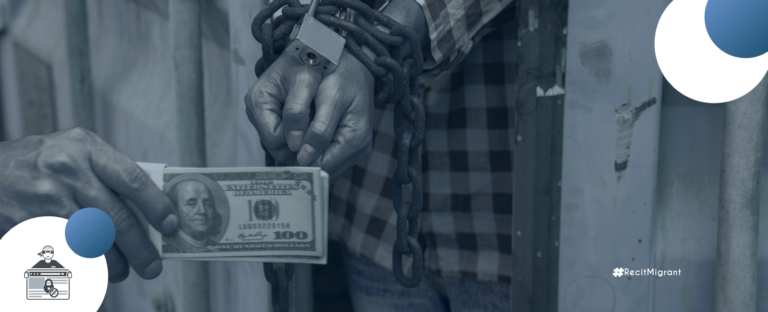
In scam centres, those recruited may have their passports confiscated, their movements restricted and their wages withheld. Some are subjected to constant surveillance and physical or psychological abuse. They are then forced to take part in romance scams, cryptocurrency fraud, fake job offers or other criminal activities. “ “When victims arrive at a scam centre, their passports are confiscated. They are often subjected to physical or psychological abuse and have no means of escaping,” emphasises Amy Pope. Some people thus remain trapped for several months, or even more than a year. This situation also raises questions about how the authorities treat them once they are identified after having taken part in fraudulent activities.
The IOM maintains that people forced to commit crimes through coercion, threats, violence or deception must be regarded as victims of trafficking and afforded protection, rather than being automatically prosecuted. “ In many cases, we find that survivors of trafficking are treated as criminals, when in reality they are victims of this crime”, points out the IOM’s Director General.
Between 2022 and 2025, the organisation provided assistance to more than 3,500 victims of trafficking in online scam centres in South-East Asia. These victims came from 38 countries. In 2025, the IOM provided assistance to a total of 13,638 victims of trafficking worldwide and 159,079 vulnerable migrants. However, the organisation believes that dismantling the networks is not enough. Survivors often require psychological support, legal assistance, return assistance and reintegration support.
As criminal networks expand their recruitment activities onto digital platforms and across borders, the IOM is calling for strengthened prevention, victim identification and international cooperation.