
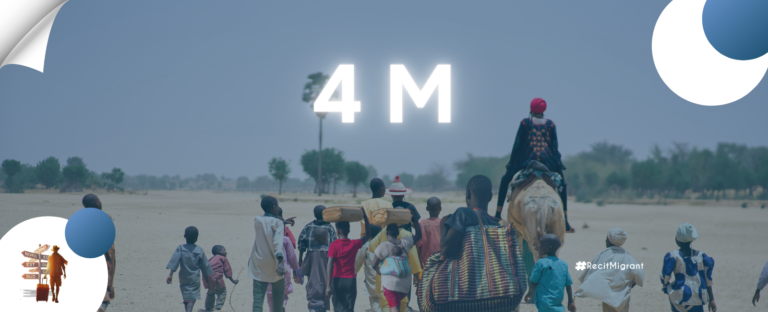
The United Nations High Commissioner for Refugees (UNHCR) has sounded the alarm over the worsening crisis of forced displacement in the Central Sahel, particularly in Burkina Faso, Mali and Niger. The region is home to nearly 4 million displaced people, including more than 818,000 refugees and asylum-seekers.
According to UNHCR, these figures have doubled since October 2020. Displacement is primarily driven by attacks on civilians and climate-related shocks, which are disrupting livelihoods.
Tens of Thousand Burkinabe Refugees Recorded in Mali
In the Malina town of Koro, around 86,000 Burkinabe refugees were identified in July 2026. Among them there are more than 14,000 children and 6,000 women in vulnerable situations. Their arrival puts additional pressure on water resources, land, health services and the livelihoods of host communities. UNHCR also highlights the impact of climate-related shocks on agriculture and infrastructure.
Agricultural Initiatives Supported by UNHCR
In Koro, agricultural cooperatives supported by UNHCR have expanded their cultivated land from 21 hectares in 2025 to 45 hectares in 2026. These activities are helping to improve food production and household incomes. Similar initiatives are also being implemented in Kaya, in Burkina Faso.
A Crisis Affecting Several Countries in the Region
In 2026, nearly 500,000 Burkinabe refugees and asylum-seekers were staying in neighbouring countries, compared with more than 300,000 at the end of 2025. They are being hosted in particular in Benin, Côte d’Ivoire, Ghana and Togo. UNHCR also records more than 334,000 Malian refugees abroad and more than 106,000 Nigerien refugees and asylum-seekers in neighbouring countries, some of whom are likely to continue their journey to North Africa and then on to Europe.
Insufficient Funding to Meet Needs
In September 2026, UNHCR’s response in the Sahel was funded at only 27 per cent of the $329.6 million required. The organisation is calling for increased funding for the protection of displaced people, education, livelihoods and support for host communities. UNHCR also emphasises the need to find durable solutions and to address the factors of insecurity that are causing displacement.