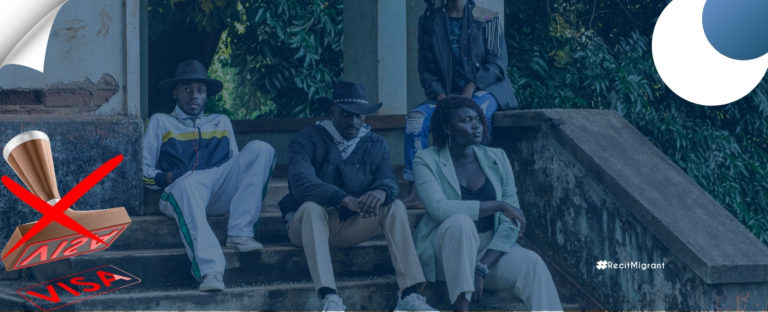
For thousands of young Africans, getting a visa has become an obstacle course. Behind the figures, one reality stands out: a growing frustration, often silent, but deeply rooted. Between dreams of study, career opportunities and a simple wish to move, repeated refusals feed a sense of injustice and exclusion.
Recent data from the Centre for European Reform (CER), published in April 2025, confirm a worrying trend. In 2022, European authorities rejected around 30% of African applications for a Schengen visa, up from 18% in 2014, a sharp rise in less than a decade.
More worrying still, in 2023 they refused nearly 704,000 visa applications from African nationals, with rejection rates topping 40% in some countries.
Other analyses place several African countries among those with the highest refusal rates in the world, some above 50%.
According to Radio France Internationale (RFI), the US State Department said on 12 January that it had already revoked more than 100,000 visas since Donald Trump returned to power. The Department of Homeland Security also reported more than 605,000 expulsions in December 2025, along with 2.5 million voluntary departures.
The figures point to one reality: Africans now rank among the applicants most exposed to visa refusals worldwide.
Mobility that grows ever more unequal
The difficulty of getting a visa reaches beyond Europe. It belongs to a global system of unequal mobility.
The procedures are often long, costly and opaque. Applicants lose their fees if the answer is no, which hits their pockets hard.
Beyond the paperwork, some experts point to a form of structural discrimination. African applicants must supply more proof, from financial resources to guarantees of return and multiple supporting papers, which deepens the sense of exclusion.
Frustration settles in among young people
For Togolese youth, to take one example, these repeated refusals cut deep. They strike at both personal and collective hopes.
Kossi A., a 27-year-old student in Lomé, said: “I applied for a student visa for France. I had an offer, accommodation, everything. They refused me with no clear explanation. Since then, I wonder whether our degrees or our plans really count.”
“I had a training opportunity in Germany. I spent more than 300,000 CFA francs on the process. Refused. It’s frustrating. You feel they don’t want us, even when we follow the rules,” said Aminata, 25, in Lomé.
For Sena Klu, 30, in Dapaong: “What hurts isn’t only the refusal. It’s the feeling of being stuck. You want to grow, learn, travel, but your passport becomes a wall.”
These accounts capture a widely shared reality: many young Africans see international mobility as a privilege beyond their reach.
Economic and social fallout
The consequences run wide. Refusals brake international education, as many students lose academic opportunities. They stall careers, since people cannot join training courses, conferences or assignments. They cost money, through visa fees, tickets and insurance that no one refunds. And they breed social frustration, a sense of injustice and exclusion.
Over time, that frustration can fuel social tension. Some young people end up eyeing irregular routes, convinced the legal ones lead nowhere.
Tarnished image of host countries
Repeated refusals also shape how young Africans see Western countries.
According to several analyses, visa policies have become a source of diplomatic and social friction, and they dent these countries’ image among African elites and youth. The feeling of being singled out or discriminated against hardens a growing distrust.
Rethinking mobility?
Faced with these hurdles, some initiatives are emerging. On the continent, countries such as Kenya have recently eased their visa rules to encourage free movement within Africa.
Even so, mobility stays limited overall, even inside Africa, because of administrative and political constraints.
Silent but real anger
African youth do not always voice this frustration openly. But it surfaces on social media, in everyday conversations, in the choices people make about leaving.
This “silent anger” is more than an emotional reaction. It points to a deeper issue: equality of opportunity across the world.