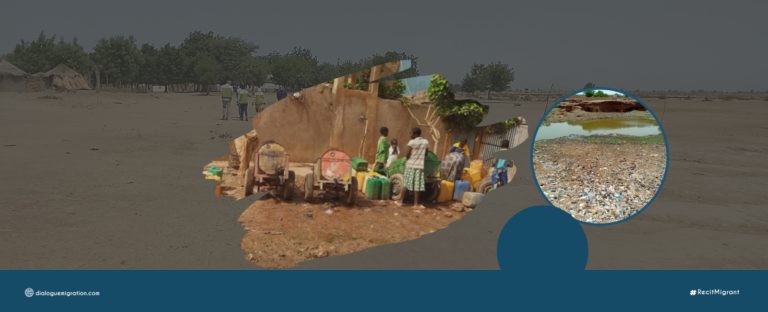
Climate change and forced displacement are converging to create a silent but profound crisis for women and girls in the Sahel. Drawing on Plan International’s A Gathering Storm study, Juli-Collette NSAH and Awa Faly BA examine how environmental shocks and insecurity are deepening menstrual precarity among adolescent girls and young women. With insights from Baltazar ATANGANA’s field experience, this analysis connects research, advocacy, and lived realities to call for urgent, gender-responsive action that restores dignity and builds resilience across the region.
A Gendered Crisis at the Crossroads of Climate and Displacement
The Sahel today stands at the intersection of multiple crises, where the effects of climate change overlap with forced displacement caused by armed conflict, fragile health systems, and socio-economic pressures. This combination creates an environment of extreme vulnerability, particularly for women and girls. In fact, the climate crisis is fundamentally a gendered crisis. According to the United Nations, women and girls represent nearly 80% of people displaced by climate change, highlighting how environmental shocks disproportionately affect them. The crisis magnifies and deepens pre-existing gender inequalities, with disproportionately severe consequences for adolescent girls and young women. Menstrual hygiene—essential to dignity and health—remains largely absent from policies and interventions. It is not a secondary issue, but a revealing indicator of structural inequalities and of the blind spots in humanitarian and climate responses.
Climate and Forced Displacement: A Spiral of Vulnerabilities
Climate dynamics in the Sahel are marked by intensifying extremes. Since the 1970s, the region has experienced an average temperature rise of 1.5°C, erratic rainfall, and accelerating desertification. Prolonged droughts reduce agricultural yields, while recurrent floods destroy basic infrastructure and wipe out harvests. These environmental shocks undermine livelihoods and push thousands of families to leave their villages.
At the same time, insecurity exacerbates forced mobility. In 2025, OCHA reported more than 3.3 million internally displaced persons across Burkina Faso, Mali, Niger, and Chad. In Cameroon’s Far North, displacement has intensified under the combined pressure of Boko Haram attacks and climate shocks. Camps and temporary settlements, often improvised, rarely provide infrastructure adapted to women’s specific needs, deepening their marginalisation.
Drawing on Plan International’s A Gathering Storm, food security emerges as the most acute casualty of the climate crisis, with 91% of adolescent girls and young women in Mali and 86% in Burkina Faso reporting climate related shortages of food and water, disproportionately impacting them. The study further shows that climate stress is pushing girls and young women into harmful coping mechanisms—including, in the most severe cases, exchanging their bodies for food, underscoring the urgent need for gender responsive, protective food security interventions that center their voices and agency.
This dual burden—climate and insecurity—creates conditions in which women and girls are forced to live without access to clean water, safe latrines, or basic hygiene products. Menstrual management becomes a daily struggle, invisible yet heavy with consequences.
Menstrual Hygiene in Protracted Crisis
Recent surveys highlight the severity of menstrual precarity. Plan International (2025) found that nearly 70% of displaced adolescent girls in Niger and Burkina Faso lacked regular access to menstrual products.
“If, as a girl, you cannot properly wash the cloth you use for your period, it creates other (health) problems.” Adolescent girl participant (15-17 years old), Ouahigouya, Burkina Faso.
In Cameroon’s Far North, supply chains severely disrupted by massive flooding and ongoing armed attacks have made essential menstrual hygiene products such as sanitary pads increasingly scarce and expensive. According to UNICEF, nearly 460,000 people were affected by floods in 2024, with homes, farmland, and critical infrastructure destroyed, further limiting access to markets and basic goods. At the same time, persistent insecurity linked to armed groups has forced thousands of families to flee or restrict their movements, significantly disrupting access to health and hygiene services. At the national level, around 70% of women and girls in Cameroon lack access to basic menstrual hygiene products due to high costs and limited availability. As a result, many women and girls are compelled to rely on unsafe alternatives such as cloth scraps, paper, or leaves, increasing their risk of urinary tract infections, reproductive health complications, and other preventable health issues—particularly in a region already facing significant humanitarian and healthcare challenges.
Menstrual precarity is not only a health issue—it carries social and educational consequences. Girls miss school during their periods, reinforcing inequalities in access to education. In camps, the absence of safe latrines exposes women to harassment and sexual violence. Menstrual management thus becomes a stark indicator of structural inequality and of the blind spots in humanitarian policy.
When Floods Erase Dignity
In July 2025, during fieldwork in Yagoua, in Cameroon’s Mayo–Danay department—an area regularly affected by flooding from the Logone and Chari rivers—we met families displaced by rising waters and insecurity. One adolescent girl told us:
“When the rains swept away the latrines at our school, I no longer had a safe place to change. During my period, I stayed at home. My brothers continued going to class, but I could not.”
Worst still, climate induced displacement, poverty, and breakdowns in law, and social support systems— increases the risks of trafficking ; Girls go long distances to fetch water and are prone to sexual harassment, sexual exploitation, and physical harm
Her words illustrate how a climate shock translates directly into educational exclusion and the reproduction of gender inequality. In villages along the river, women explained that the scarcity of menstrual products forced them to choose between buying millet to feed their children or sanitary pads for themselves. This daily tension reveals the depth of the crisis: menstrual management becomes an unaffordable luxury, when it should be a fundamental right.
The struggle for money and resources also impinges on adolescent girls and young women’s ability to stay in school. Once girls drop out of school their chance of early and forced marriage increases. The impact, both of early marriage and the lack of education, on their future lives and prospects is immeasurable “With the increase in forced marriages… I am traumatized, because if your parents do not have the means to provide for your family needs, they give you up very early for marriage, so I am affected.” Young woman participant, Mali (Plan International « A Gathering Storm »)
The Sahel in Mirror: Shared Realities, Common Challenges
In Burkina Faso, displacement camps face chronic shortages of hygiene kits, worsened by insecurity that restricts supply routes. In Mali, drought -affected rural areas see girls dropping out of school due to inadequate sanitary conditions. In Niger, recurrent floods destroy WASH infrastructure, aggravating menstrual precarity and forcing girls into isolation. In Chad, camps hosting Sudanese refugees are overcrowded, and menstrual needs are sidelined in humanitarian priorities. In Cameroon, the combination of armed violence and climate shocks creates a double marginalisation of displaced women, who must navigate both insecurity and sanitary precarity.
It is worth noting that the impact of climate change on sexual and gender-based violence (SGBV) and sexual and reproductive health and rights (SRHR) of adolescent girls and young women is significant but often shrouded in silence due to societal norms, taboos, and shame. Many adolescent girls and young women (AGYW) in the Sahel face barriers to discussing these issues openly, as was revealed in the Plan International study.
This regional comparison shows that, despite specific contexts, menstrual precarity is a common denominator, exposing the absence of systemic approaches. It also underlines that climate and security crises are not gender-neutral: they affect populations differently, and women bear a disproportionate cost.
Menstrual Hygiene and One Health: An Integrated Approach to Resilience
Integrating menstrual hygiene into humanitarian and climate responses is both a technical and strategic necessity. Relief kits must include sanitary pads, soap, and culturally appropriate materials. Infrastructure must be designed to withstand climate shocks: raised latrines to resist floods, solar -powered water systems to mitigate drought. Local women’s organisations should be involved in design and monitoring to ensure relevance and sustainability.
This approach must be linked to the One Health framework, which recognises the interdependence of human health, animal health, and ecosystem health. In the Sahel, menstrual hygiene cannot be separated from environmental dynamics: water scarcity, contamination of sources, pressure on natural resources, and mass displacement directly shape women’s and girls’ health. By embedding menstrual hygiene within a One Health perspective, humanitarian and climate actors acknowledge that women’s dignity and health are inseparable from community resilience and ecosystem stability.
Menstrual management thus becomes both a public health indicator and a measure of climate resilience, reflecting the capacity of systems to protect the most vulnerable and to deliver integrated responses to crisis.
From Policy Commitments to Concrete Action
Menstrual hygiene in the Sahel must no longer be treated as peripheral. It lies at the heart of dignity, justice, and resilience. Responses must be practical and concrete: systematic distribution of menstrual kits in camps, construction of latrines adapted and resistant to floods, establishment of sustainable water systems, integration of menstrual education into school curricula, and inclusion of women in local governance.
A resilience strategy must connect climate, health, and gender within a One Health logic. Women’s and girls’ health is a central indicator of societies’ ability to withstand crises. By placing menstrual hygiene at the core of humanitarian and climate policies, regional and international actors can transform a silent challenge into a lever for justice and social transformation.
Operationally, national and local governments must:
• Acknowledge the gendered impacts of climate change and, working alongside adolescent girls and young women, fund and implement gender transformative programmes and policies.
Authorities should collaborate on grassroots initiatives for information, preparedness, and rebuilding, including climate education with adolescent girls and young women at the center.
• Revise and enforce legal frameworks and environmental policies that protect socioeconomic rights to food, water, education, and health and create awareness around pollution, environmental degradation, and climate change adaptation.
• Engage adolescent girls’ and young women’s participation in climate policymaking, including climate finance; provide and push for dedicated climate adaptation funding for initiative, and ensuring adolescent girls and young women from diverse backgrounds have equal opportunities to shape climate agendas.
• Provide long-term, flexible funding and capacity strengthening to local organizations; working at the intersection of climate, gender, and youth, prioritizing adolescent girl and young women led groups.
About the Authors :
Baltazar ATANGANA is a gender, inclusion and development expert. He has worked as a technical assistant and consultant on numerous international programs across Central and West Africa, focusing on women’s access to land, climate change, and biodiversity conservation. He is also the author of several books and articles, including Lutte de Femmes (2025).
Awa Faly BA is the Global Policy, Campaigns, Engagement and Advocacy Director at Plan International. Formerly Country Director of Plan International Togo, she has built a career dedicated to advancing inclusion, dignity, and the rights of women and girls. Her leadership connects global policy frameworks with grassroots realities, ensuring that African voices shape international agendas.
Juli -Collette NSAH is Regional Policy, Advocacy and Research Specialist at Plan International West and Central Africa. She specializes in linking evidence based research with advocacy strategies, ensuring that adolescent girls and young women are at the center of climate and gender policies. Her work bridges regional priorities with global commitments, strengthening resilience and equity across the Sahel.