
![[Press review]: From expulsions and shipwrecks to justice and hope, a world of contradictions lies ahead.](https://migration.africtivistes.org/wp-content/uploads/2025/11/Ines-1-768x312.png)
Migration realities, ranging from deadly shipwrecks and controversial expulsions to the trials of smugglers and diplomatic tensions, come into collision across the globe, from Nouadhibou to London, Tunis to Accra and Ankara to Paris. However, there are also educational initiatives and advocacy efforts that portray migration as an opportunity rather than a threat.
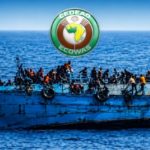
The coastguard rescued 227 migrants off the coast of Nouadhibou in Northern Mauritania. Some of them were in critical condition, and sadly, one person lost their life. The migrants had set off from Gambia in an attempt to reach the Canary Islands, which serves as a stark reminder of the dangers of the Atlantic route, now one of the deadliest. In Nouadhibou, Mauritania, a school founded by migrants now welcomes the children of families who have chosen to settle there instead of risking their lives striving to get to Europe. This is a hopeful sign for the future of a city that has become a major migration crossroads.
Further west in Dakar, filmmaker Cheikh Mahfousse Samb is raising awareness through his film, “Le prix du rêve” (The Price of the Dream), which aims to prevent young people from falling victim to fake agents or dangerous migration routes. In Senegal, Mamadou Mignane Diouf, coordinator of the Senegalese Social Forum, argues that “migration should be considered a demographic factor that contributes to the well-being”. He emphasises the positive role that human mobility can play in development.
However, migration continues to be tragically criminalised in other regions of Africa. In Tunisia, for example, Amnesty International has sounded the alarm and denounced a “dangerous shift” in migration policy characterised by violence, deportations to the Libyan and Algerian deserts, and systemic racism. Meanwhile, the African Union Commission is urging States to “rethink migration as a strength to be valued”, emphasising that mobility is an economic, social and human reality, not a problem.
The issue of migration now extends beyond the borders of Africa. In Turkey, the Embassy of Chad has warned of a rise in the number of young Chadians making irregular departures to Europe via Istanbul, having been lured by clandestine networks. Many who arrive legally even end up being detained, expelled or stranded. Caught between the promise of Europe and legal realities, Turkey is fast becoming a trap for migrants.
Pressure in Europe is growing stronger. In the United Kingdom, for example, the government has announced drastic changes to asylum rules, including shorter protection periods and stricter requirements for permanent residency. There is also now a threat of sanctions against Angola, Namibia, and the Democratic Republic of the Congo (DRC) for “insufficient cooperation” in deportations. These African countries have one month to agree to take back their citizens, or face visa restrictions. Some observers describe this as “migration-by-blackmail”.
In northern France, associations are mobilising. In Dunkirk, six organisations – including Médecins du Monde and Utopia 56 – have sued the French government for “failing to respect the human rights” of the more than 2,000 migrants living in dire conditions in makeshift camps. The organisations are demanding access to hygiene facilities, healthcare and shelter, and are denouncing repeated evictions for which no alternative solutions are offered.
The English Channel remains a symbol of destruction and loss. During the trial in Paris concerning the deadly shipwreck in August 2023, in which seven Afghan migrants lost their lives, prosecutors requested prison sentences ranging from three to 15 years for eight alleged smugglers. In a rare decision, the lead pilot – who is himself a Sudanese migrant – was recognised as a victim rather than a perpetrator.
Meanwhile, across the Atlantic, the United States is considering refusing visas not only on the basis of applicants’ financial status, but also their health. Conditions such as diabetes, certain cancers and heart disease could result in refusal on the grounds that these individuals might incur costs for the US healthcare system. This measure raises ethical concerns and calls into question the value placed on human dignity in migration policies.
Despite tragedies at sea, discrimination, expulsions and repression, migration is still too often viewed as a threat. However, there are growing calls across Africa, Europe and the United States to remind us that migration is also a story of dreams, dignity, development, education and the future. Above all, it is a human reality.

![[Press review]Migration: Striking a Balance Between Inclusion, Border Control](https://migration.africtivistes.org/wp-content/uploads/2026/10/Ines-3-_-Revue-de-presse-_-La-migration-entre-inclusion-et-controle-des-frontieres-150x150.png)